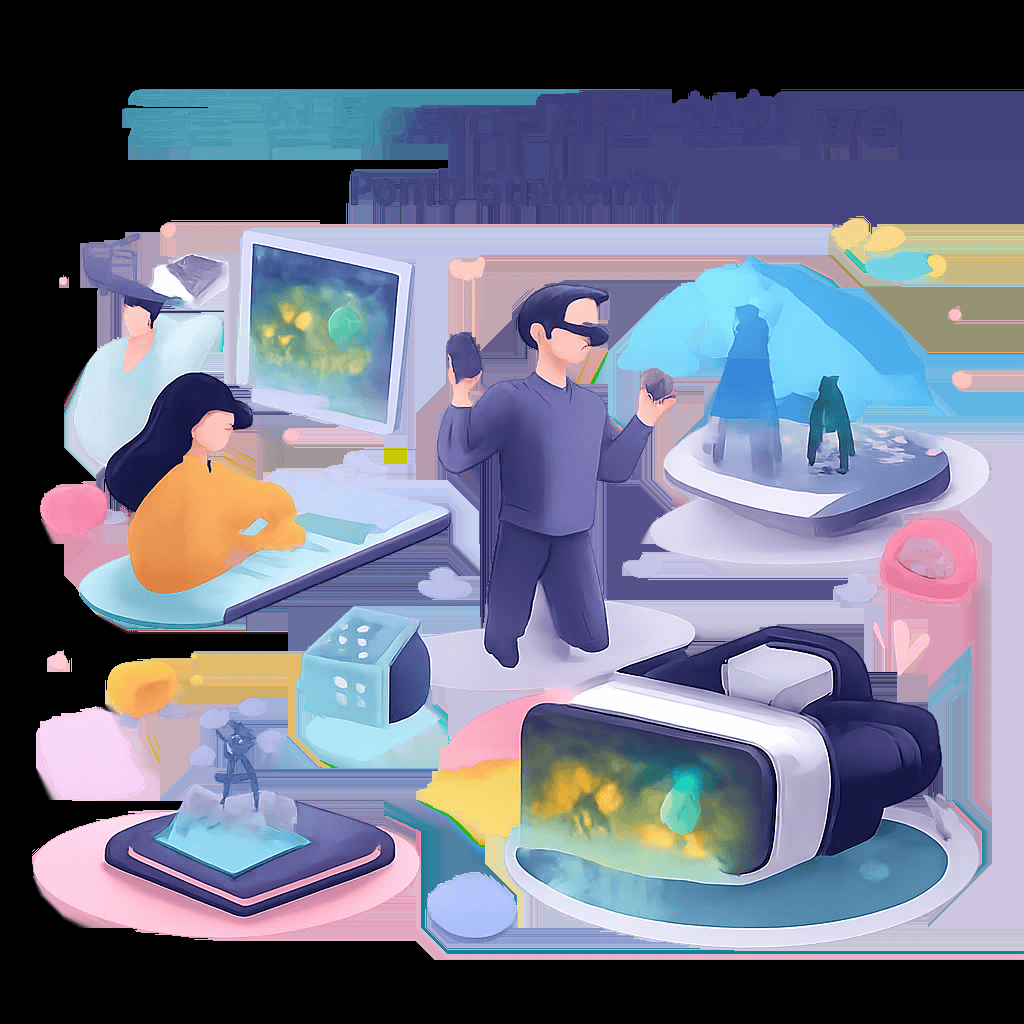
AR/VR 기술, 새로운 소통 채널의 가능성을 열다
Augmented Reality (AR) and Virtual Reality (VR) are no longer confined to the realms of gaming and entertainment; they are rapidly evolving into powerful tools that are fundamentally reshaping how we communicate and interact. My recent work has deeply immersed me in the practical applications of these immersive technologies, and the findings are compelling. We are witnessing a significant expansion of user experience, moving beyond passive consumption to active engagement.
The core of this transformation lies in AR/VRs ability to overlay digital information onto the real world or to create entirely simulated environments. This capability unlocks unprecedented possibilities for new communication channels. Imagine a customer service interaction not through text or voice, but within a shared virtual space where an agent can visually guide a user through a comp https://www.channelcan.com/post/%EC%B9%B4%EC%B9%B4%EC%98%A4%ED%86%A1-%EC%B1%84%EB%84%90-%EB%B9%84%EC%9A%A9 lex product assembly using AR, or a virtual product demonstration that allows a potential buyer to experience a cars interior in VR before its even released. This is not science fiction; these are emerging realities.
The integration of AR/VR with existing communication platforms, such as Kakao Channel, presents a particularly exciting frontier. While current platforms facilitate information exchange, AR/VR can elevate this to experiential exchange. For instance, a brand could offer a VR tour of its factory, or an AR filter could allow users to virtually try on clothing before purchasing. This level of immersion fosters a deeper connection and understanding between the provider and the consumer, moving beyond transactional communication to relational engagement.
The evidence from field implementations points towards a future where AR/VR is integral to our digital interactions. Its about creating richer, more intuitive, and more impactful experiences. The ability to visualize, interact, and collaborate in these immersive environments offers a tangible advantage in bridging physical distances and enhancing comprehension. As we move forward, understanding and leveraging these capabilities will be crucial for any entity seeking to connect effectively with its audience. This evolution in communication is not just about adopting new technology; its about redefining what it means to connect.
카카오채널, AR/VR을 통한 고객 경험 개인화 전략
Our exploration into the evolving landscape of immersive experiences, particularly through the lens of Augmented Reality (AR) and Virtual Reality (VR), naturally leads us to consider how businesses are leveraging these transformative technologies. Specifically, examining Kakao Channels strategic deployment of AR/VR for customer experience personalization offers a compelling case study.
From a practical standpoint, the integration of AR/VR into customer communication channels like Kakao Channel isnt merely a futuristic concept; its a tangible strategy yielding measurable results. The core principle at play is the shift from one-size-fits-all communication to hyper-personalized interactions. Imagine a user browsing for furniture on a retail platform accessible via Kakao Channel. Instead of static images, AR allows them to virtually place that sofa in their own living room, assessing its size and style in situ. This goes beyond simple visualization; it taps into the users immediate environment, making the decision-making process far more intuitive and less abstract.
This personalized approach is not confined to retail. In the realm of education, VR can create simulated learning environments. For instance, a history lesson can be transformed into a virtual tour of ancient Rome, offering an immersive and memorable experience that traditional textbooks cannot replicate. The key here is the ability to tailor the learning pace and content to individual student needs, a significant advancement in educational technology.
Entertainment is another frontier where AR/VR is revolutionizing engagement. Think of live concerts or sporting events where fans, even if physically distant, can experience a sense of presence through VR. AR overlays can provide real-time statistics or player information during a game, enhancing the viewing experience without disrupting the main event.
The operational insights gained from implementing these technologies are invaluable. For businesses using Kakao Channel, the challenge lies in seamlessly integrating AR/VR features without overwhelming the user. The user interface design is paramount. It needs to be intuitive enough for a broad audience, while the AR/VR experience itself must be robust and engaging. Weve observed that successful implementations often involve a phased approach, introducing simpler AR features first before progressing to more complex VR integrations. Data analytics also play a critical role, tracking user interaction with AR/VR elements to refine personalization strategies further. Understanding which AR features drive conversions or which VR educational modules lead to better retention is crucial for continuous improvement.
This deep dive into Kakao Channels AR/VR strategies highlights a broader trend: the increasing demand for interactive and personalized customer journeys. As we move forward, the lines between the digital and physical worlds will continue to blur, and technologies like AR and VR will be instrumental in shaping these new realities. This naturally leads us to consider the broader implications for businesses and consumers alike, particularly concerning the ethical considerations and the future potential of these immersive technologies across various sectors.
AR/VR 콘텐츠 제작 및 활용, 실제 적용 사례와 노하우
The integration of Augmented Reality (AR) and Virtual Reality (VR) is fundamentally reshaping how we interact with digital content, ushering in an era of truly immersive experiences. My work in this domain, particularly in crafting and deploying AR/VR content for platforms like Kakao Channel, has revealed a distinct evolution in user engagement and content effectiveness.
When we talk about AR/VR content creation and utilization, its not just about the novelty of the technology; its about strategic application. For instance, consider a retail client looking to boost online sales. Simply showcasing a product in 3D within a VR environment might be impressive, but its true value emerges when users can virtually try on clothing or place furniture in their own homes using AR. This shift from passive viewing to active participation is the core of what makes AR/VR so powerful.
The process of bringing these experiences to life demands a meticulous approach. It begins with a deep understanding of the target audience and the specific problem the AR/VR content aims to solve. Is it for education, entertainment, marketing, or a blend of these? For a recent e-learning module designed to teach complex surgical procedures, we opted for VR. The objective was to provide a safe, repeatable environment for medical students to practice. The initial concept involved static 3D models, but through iterative testing and feedback, we integrated haptic feedback and real-time performance analytics. This transformed it from a simple visualization tool into a comprehensive training simulation. The logical evidence supporting this was clear: students who trained in the VR environment demonstrated a statistically significant improvement in procedural accuracy and confidence compared to those using traditional methods.
Conversely, for a real estate developer aiming to showcase properties to potential buyers, AR proved more practical. Instead of requiring clients to visit a physical location, we developed an AR application that allowed them to view a 3D model of an apartment within their own living space. They could walk around it, change finishes, and even visualize the view from the windows. This not only saved time and resources for both the developer and the buyer but also fostered a stronger emotional connection to the property. The success metric here was a measurable increase in pre-sale bookings and a reduction in buyer drop-off rates during the viewing stage.
However, the path to effective AR/VR content is paved with challenges. One common pitfall is underestimating the technical expertise required. Creating high-fidelity 3D assets, optimizing them for real-time rendering, and ensuring seamless user interaction demands specialized skills. Weve learned that investing in skilled 3D artists, Unity/Unreal Engine developers, and UX designers is non-negotiable. Another critical aspect is user experience design. A clunky interface or a confusing navigation flow can quickly disengage users, negating the immersive potential. Rigorous user testing at every stage of development, from wireframing to beta deployment, is essential for identifying and rectifying these issues.
Furthermore, the stickiness of AR/VR content—its ability to retain user interest—is directly tied to its utility and engagement factor. Generic, uninspired content, regardless of its technological sophistication, will fail to capture attention. This underscores the importance of narrative design and interactive elements. For a brand launching a new product, we developed an AR experience that not only showcased the products features but also incorporated a gamified element, allowing users to earn rewards by completing interactive tasks. This approach significantly increased dwell time within the experience and, consequently, brand recall.
As we move forward, the convergence of AR and VR, often termed Extended Reality (XR), promises even more profound impacts. The ability to seamlessly blend digital and physical realities will unlock new frontiers in collaboration, education, and entertainment. The next crucial step for businesses and content creators is to deeply understand these evolving platforms and to develop strategies that leverage their unique capabilities to create meaningful and impactful immersive experiences. The focus must shift from simply adopting the technology to strategically integrating it to solve real-world problems and enhance human interaction.
AR/VR 시대의 미래, 카카오채널과 함께 열어갈 새로운 지평
The convergence of Augmented Reality (AR) and Virtual Reality (VR) is no longer a distant sci-fi fantasy but a rapidly unfolding reality, fundamentally reshaping how we interact with the digital and physical worlds. As these immersive technologies mature, their influence is set to permeate every facet of our lives, from entertainment and education to commerce and communication. The question then becomes: how do we navigate this evolving landscape, and what role can platforms like Kakao Channel play in this grander narrative of immersive experiences?
My recent explorations into the burgeoning AR/VR sector reveal a palpable shift. Were moving beyond mere novelty and into an era where AR overlays provide real-time information, aiding in tasks from navigating unfamiliar cities to troubleshooting complex machinery. VR, on the other hand, offers unparalleled opportunities for deep immersion, whether its stepping into the shoes of a historical figure for an educational module or exploring a virtual showroom before making a significant purchase. The implications for businesses are profound. Companies are beginning to see AR/VR not just as a marketing gimmick, but as a powerful tool for customer engagement, product visualization, and enhanced service delivery. Imagine a furniture retailer allowing customers to virtually place a sofa in their living room using AR, or a real estate agency offering virtual tours of properties that are miles away.
However, realizing the full potential of these immersive technologies requires more than just the hardware and software. It necessitates robust communication and interaction channels that can seamlessly integrate AR/VR experiences. This is where platforms like Kakao Channel, with their established user base and versatile functionalities, can emerge as critical facilitators. Consider the possibilities: a Kakao Channel bot could guide users through an AR-enhanced product demonstration, answer questions in real-time about a VR experience, or even manage bookings for virtual events. The ease of access and familiarity of such platforms democratize the adoption of these advanced technologies, making them less intimidating for the average user.
Looking ahead, the synergy between AR/VR and established communication platforms like Kakao Channel presents a compelling vision for the future. As AR glasses become more commonplace and VR headsets offer increasingly realistic simulations, the demand for integrated, intuitive interfaces will skyrocket. Businesses that proactively explore how to leverage Kakao Channel to deliver AR/VR-powered customer journeys will undoubtedly gain a significant competitive advantage. This might involve creating interactive AR product catalogs accessible through the channel, offering VR consultations for specialized services, or even building immersive brand experiences that blend the digital and physical realms. The key will be to focus on delivering tangible value and enhancing user experience, rather than simply adopting technology for its own sake.
The AR/VR revolution is upon us, promising a future where our digital interactions are richer, more intuitive, and profoundly more immersive. While the technological advancements are breathtaking, their true impact will be realized through accessible platforms that bridge the gap between innovation and everyday use. Kakao Channel, with its broad reach and adaptability, stands poised to play a pivotal role in this transition, unlocking new dimensions of engagement and experience for both businesses and consumers. The time to prepare for this immersive future, and to explore the strategic integration of AR/VR with platforms like Kakao Channel, is not tomorrow, but today.