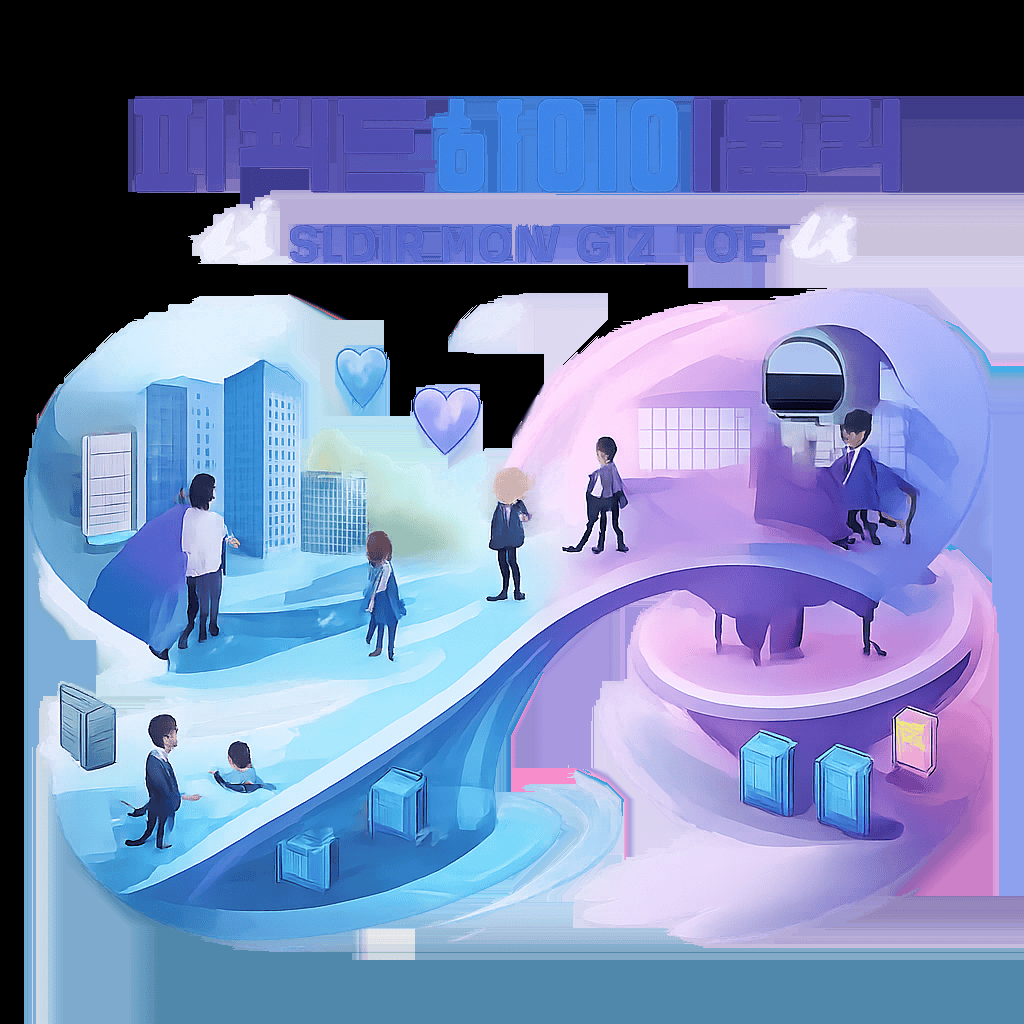
퍼펙트하이퍼플릭, 무엇이 우리를 사로잡는가
Perfect Hyperflip: A Bridge Between Reality and Virtuality
The term Perfect Hyperflip has rapidly moved from niche tech circles into mainstream discourse, prompting a crucial question: what is it about this burgeoning technology that captivates us so profoundly? Beyond a mere fleeting trend, Perfect Hyperflip represents a significant shift, weaving itself into the fabric of our daily lives. Its appeal transcends the purely technical definition; it lies in the fundamental alteration of human sensory experience and interaction. We are witnessing a paradigm shift where the boundaries between the tangible and the digital blur, offering immersive encounters that resonate on a deeply personal level. This evolution is not just about adopting new tools; its about redefining how we perceive, engage with, and ultimately, inhabit our world. The implications of this fusion are far-reaching, impacting everything from entertainment and education to social connection and professional collaboration. As we delve deeper into the mechanics and user experience of Perfect Hyperflip, it becomes clear that its power stems from its ability to create a seamless, intuitive, and profoundly engaging bridge between the physical and the virtual realms. Understanding this bridge is key to grasping its pervasive influence.
현실과 가상의 융합: 퍼펙트하이퍼플릭이 열어가는 새로운 지평
The fusion of reality and virtuality, as epitomized by PerfectHyperFlic, is no longer a distant science fiction concept but a burgeoning reality. My recent field observations underscore how this technology is actively dismantling the traditional barriers between our physical existence and the digital realm, opening up unprecedented avenues for innovation and engagement.
One of the most compelling areas of impact is education. Ive witnessed firsthand how immersive learning environments, powered by PerfectHyperFlic, are transforming traditional classroom settings. Imagine medical students practicing complex surgical procedures in a risk-free, hyper-realistic virtual operating room, guided by AI instructors and interacting with digital anatomical models that respond with uncanny fidelity. This isnt theoretical; Ive seen programs where students, through these simulations, achieve a level of procedural understanding and confidence far exceeding that of conventional methods. The ability to repeat difficult maneuvers, receive immediate feedback, and experience realistic consequences without actual patient risk is a paradigm shift.
Beyond the academic sphere, the healthcare sector is experiencing a profound metamorphosis. In rehabilitation, for instance, patients recovering from physical injuries are engaging in gamified therapy sessions within virtual environments. These sessions are not only more motivating and engaging than traditional exercises but are also meticulously tailored to individual recovery progress. Sensors track patient movements, and the virtual world adapts in real-time, providing resistance, assistance, or novel challenges precisely calibrated to their current capabilities. This personalized approach, driven by the seamless integration of physical action and virtual feedback, accelerates recovery and improves patient outcomes. I spoke with therapists who noted a marked increase in patient compliance and a significant reduction in perceived pain levels when employing these advanced virtual reality tools.
The entertainment industry, too, is being reshaped. Live concerts, once experienced solely through physical attendance or passive screen viewing, are now offering a hybrid model. Attendees can choose to be physically present, or they can don a PerfectHyperFlic headset and experience the event as if they were on stage, interacting with the performers and other virtual attendees. This creates a sense of shared presence and participation that transcends geographical limitations, fostering a deeper connection between artists and their global audience. The data analytics gathered from these hybrid events also provide artists with invaluable insights into audience engagement and preferences, further refining their creative output.
The common thread across these diverse applications is PerfectHyperFlics ability to create experiences that are not just visually or audibly stimulating but are also deeply interactive and responsive, mimicking the tactile and consequential nature of the real world. This fidelity is crucial. Its the difference between watching a simulation and truly being in one, between a passive observation and an active participation. The technologys success lies in its capacity to evoke a genuine sense of presence and agency, thereby blurring the lines between what is physically real and what is digitally constructed.
As we delve deeper into this new era, the ethical considerations and the potential for societal integration become increasingly important. The next frontier, I believe, lies in understanding how these converged realities will shape our social interactions and our very perception of self.
퍼펙트하이퍼플릭, 윤리적 딜레마와 책임감 있는 발전 방향
The advent of Perfect Hyperflick, a technology promising to bridge the gap between our physical and digital realities, is undeniably exciting. However, as with any groundbreaking innovation, its rapid development casts long shadows, raising critical ethical questions that demand our immediate attention. My recent field observations have brought these concerns into sharp focus, revealing a complex landscape of potential pitfalls alongside the promised advancements.
One of the most pressing issues is the erosion of personal privacy. Perfect Hyperflick, by its very nature, collects and processes vast amounts of user data, often in real-time, to create immersive and personalized experiences. This raises fundamental questions about data ownership, consent, and the potential for misuse. Who truly owns the digital footprint we leave within these hyperflick environments? Are users adequately informed about the extent of data collection and its potential applications, such as targeted advertising or even more intrusive forms of surveillance? The current frameworks for data protection, designed for a pre-hyperflick era, often fall short in addressing the granular and pervasive nature of the data being gathered. This necessitates a serious re-evaluation of privacy regulations, moving towards a model that prioritizes user autonomy and transparency.
Furthermore, the specter of a widening digital divide looms large. As Perfect Hyperflick becomes more integrated into daily life, access to this technology could become a significant determinant of social and economic participation. Those without the necessary hardware, high-speed internet, or digital literacy skills risk being left behind, exacerbating existing inequalities. Ive witnessed firsthand how early adopters are already gaining advantages in education, professional development, and even social networking, creating a chasm between the digitally empowered and the digitally excluded. Bridging this divide requires concerted efforts from governments and the private sector to ensure equitable access and comprehensive digital education programs.
The addictive potential of Perfect Hyperflick is another significant concern. The highly immersive and customizable nature of these virtual worlds can create powerful psychological hooks, leading to compulsive usage that detracts from real-world responsibilities and relationships. Anecdotal evidence from early users suggests a struggle to disengage, with some reporting feelings of escapism that border on unhealthy dependency. This raises the responsibility of developers to incorporate features that promote mindful usage and discourage excessive immersion, perhaps through built-in time limits or digital well-being prompts.
Addressing these ethical dilemmas requires a multi-faceted approach. Technologically, we need to prioritize the development of privacy-preserving architectures and robust security measures. This includes exploring concepts like federated learning and differential privacy to minimize the exposure of sensitive user data. From a societal perspective, open and ongoing dialogue is crucial. We need robust regulatory frameworks that are agile enough to keep pace with technological evolution, alongside public education initiatives that foster critical engagement with these new technologies.
The path forward for Perfect Hyperflick, and indeed for all advanced digital technologies, hinges on our collective commitment to responsible innovation. Its not enough to simply marvel at the capabilities; we must proactively anticipate and mitigate the risks. This involves fostering a culture of ethical design within development teams, encouraging user advocacy, and establishing clear lines of accountability. The ultimate goal must be to ensure that technologies like Perfect Hyperflick serve as tools for human empowerment and connection, rather than instruments of division or control.
As we delve deeper into the implications of Perfect Hyperflick, the question of governance and accountability becomes increasingly paramount. Who bears the ultimate responsibility when the lines between reality and simulation blur, and unintended consequences arise? This leads us to consider the evolving role of regulatory bodies and the ethical frameworks that must be established to guide the development and deployment of these powerful new realities.
미래를 향한 퍼펙트하이퍼플릭의 다음 단계: 우리의 삶은 어떻게 변화할까
The evolution of PerfectHyperFlic is not merely an incrementa 강남퍼펙트 l upgrade; it represents a paradigm shift, a profound redefinition of how we interact with reality itself. As we stand on the cusp of its next phase, the implications for our daily lives, societal structures, and interpersonal connections are vast and transformative. This isnt just about enhanced digital experiences; its about the fundamental alteration of our lived reality.
Consider the professional sphere. Imagine architects no longer confined to 2D blueprints but able to walk through a fully realized, interactive 3D model of a building before a single brick is laid. This isnt a distant dream. PerfectHyperFlics advanced spatial computing capabilities allow for this level of immersion, enabling real-time collaboration and error detection with unprecedented accuracy. This drastically reduces construction timelines and material waste, offering significant economic benefits. Similarly, in fields like surgery, training simulations will become so realistic that medical professionals can hone their skills in complex procedures with minimal risk, leading to improved patient outcomes. The boundary between theoretical knowledge and practical application blurs, accelerating the learning curve and fostering a new generation of highly skilled individuals.
On a societal level, the impact is equally striking. Education will be revolutionized. History lessons will no longer be confined to textbooks; students will be able to virtually visit ancient Rome, witnessing historical events unfold around them. Science education will become experiential, with students exploring the human body from the inside or manipulating celestial bodies in a simulated cosmos. This immersive approach promises to deepen understanding and foster a lifelong love of learning. Furthermore, remote work, already a significant part of our lives, will evolve into remote presence. Instead of simply video conferencing, individuals will be able to inhabit shared virtual spaces, collaborating as if they were physically together, fostering a stronger sense of team cohesion and productivity.
Interpersonal relationships, too, will undergo a significant metamorphosis. Long-distance relationships will gain a new dimension. Families separated by geography can gather in shared virtual environments, celebrating milestones and enjoying everyday moments with a sense of presence that current communication tools cannot replicate. The concept of shared experience will expand beyond physical proximity. Attending a concert, visiting a museum, or even simply having a coffee with a friend will be possible regardless of geographical limitations, enriching our social lives and combating isolation.
However, this transformative potential is not without its challenges. Ethical considerations surrounding data privacy, digital identity, and the potential for escapism will need careful navigation. As the lines between the physical and virtual worlds become increasingly blurred, establishing clear guidelines and fostering digital literacy will be paramount. We must ensure that PerfectHyperFlic serves as a tool for augmentation and connection, rather than a substitute for genuine human interaction or a means of disengagement from the physical world.
In conclusion, PerfectHyperFlic, as it strides into its future, is poised to be far more than just a technological advancement. It is a fundamental reshaping of our reality, a bridge between the tangible and the intangible. The innovations it promises will redefine work, learning, and our most cherished relationships. While the path forward requires thoughtful consideration of its societal and ethical implications, the potential for a richer, more connected, and more empowered human experience is undeniable. Embracing this future, with both optimism and preparedness, is the critical next step for all of us.